A note from next door
Home & GardenHead to head
Electric dryers, heat-pump dryers and drying racks for small city flats
Heat-pump dryers cost less to run than condenser or vented models, but they are dearer to buy. Here is how each option fits a small city flat, with drying racks too.
Start with the flat, not the brochure
Most dryer advice assumes a house with a spare room and a utility cupboard. A small city flat is different. The machine may sit in a kitchen niche, the drying space may share a room with the bed, and the windows may not open far. Does that change the answer? It does, because cost, noise and space each matter more or less depending on the room.
This article compares three electric dryer types (heat-pump, condenser and vented) with the humble drying rack, which uses no electricity at all. The brands named are examples rather than the subject. Most of the product figures below come from Bosch's own pages, plus one consumer organisation's running-cost figures.
A caveat before the numbers. Several pages were blocked or returned no product data, so the sources are thinner than a full buyer's guide would be. Where two sources disagree, the article says so.
Each section below takes one question a buyer in a flat tends to ask: what the machine costs to run, what it costs to buy, how loud it is and how much room it takes. The verdict at the end picks one path and names its main downside.
What the running-cost figures say
The clearest comparison comes from Which?, which publishes average yearly running costs for each dryer type. Its page is dated 1 October 2026 and assumes an electricity price of 26.32p per kWh and three cotton loads a week. Those are the page's assumptions, not yours, so read the pounds as a ranking rather than a bill.
On that basis, heat-pump dryers average £54.32 a year, condenser dryers £138.91 and vented dryers £139.74. The page also gives a range for each type: heat-pump dryers from £33.49 to £93.73, condensers from £113.80 to £181.45, and vented dryers from £116.44 to £166.77. The heat-pump range tops out well below where the condenser range starts, so the ranking holds across the whole sample, not just on average. How much does that matter? For a flat with a steady laundry routine, quite a lot.
An average also hides how much one household's habits change the result. The page's ranges show that the same type can cost quite different amounts, so the low and high ends are worth reading alongside the middle figure. The page's own assumption of three cotton loads a week is one point inside that spread, and a flat with a different routine will land elsewhere in it.
The same page says an A-rated dryer costs roughly half as much to run as an average C-rated one. That makes the energy label a useful second check once you have chosen the type.
Which? sample models: a Samsung heat-pump at about £45 a year, a Montpellier condenser at about £128, and a Candy vented model at about £167
Bosch WRB247C9GB (Series 8, 9 kg): one footnote on the Bosch UK tumble-dryer page reads 79 kWh, under EU Regulation 2023/2534
The same page's FAQ gives 149 kWh for an unnamed Bosch Series 8 model
Bosch's conventional comparison point, the WTN83202GB, is listed at 343 kWh
Heat-pump dryers: cheapest to run, dearest to buy
The running-cost gap is the main reason to look at heat-pump dryers. Which? says that although they 'can be expensive to buy', heat-pump models 'cost a lot less to run than condenser or vented models'. Is the gap big enough to matter in a small flat that runs only a few loads? That depends on how often the machine runs, so the averages above are the place to start.
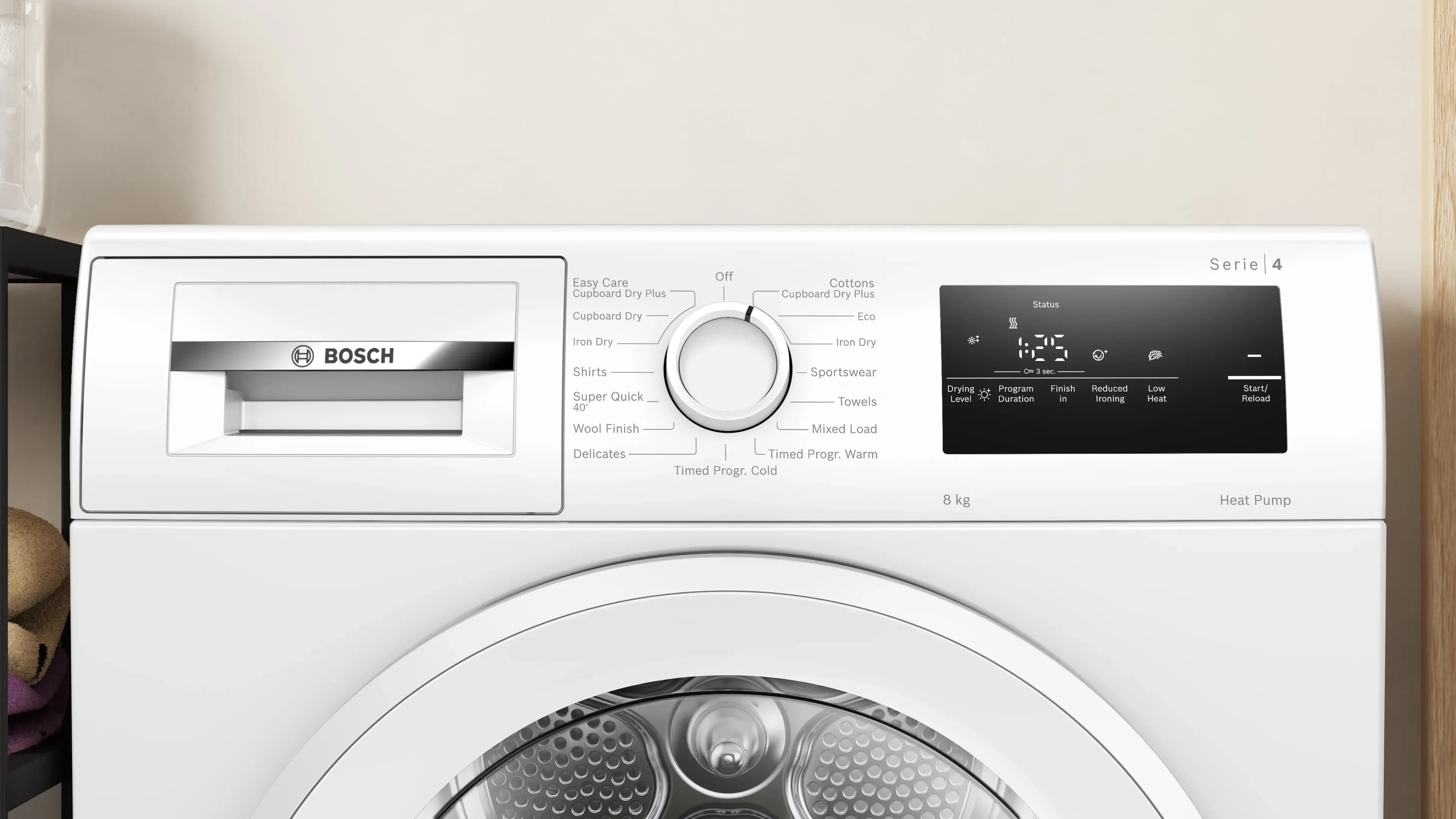
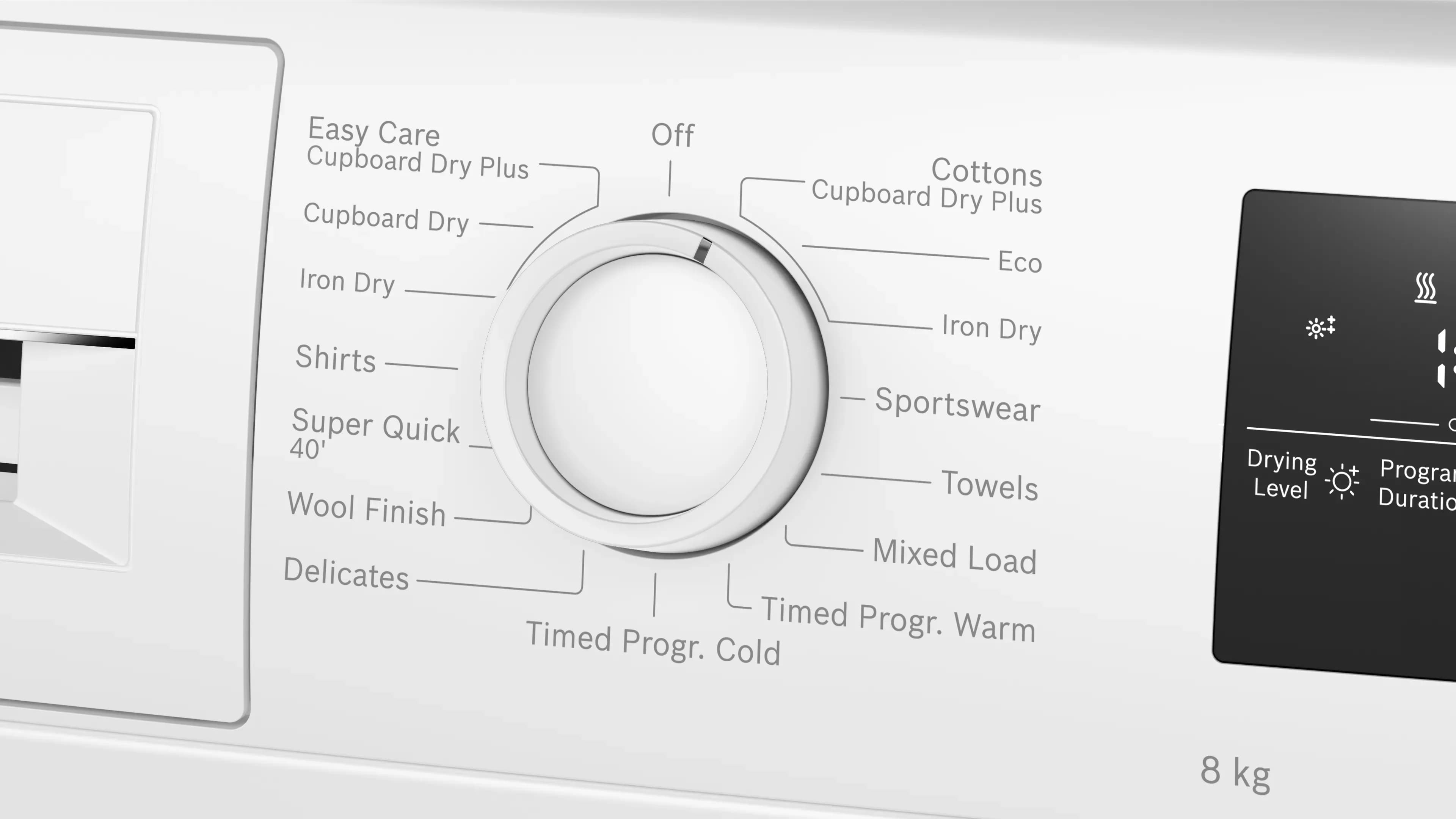
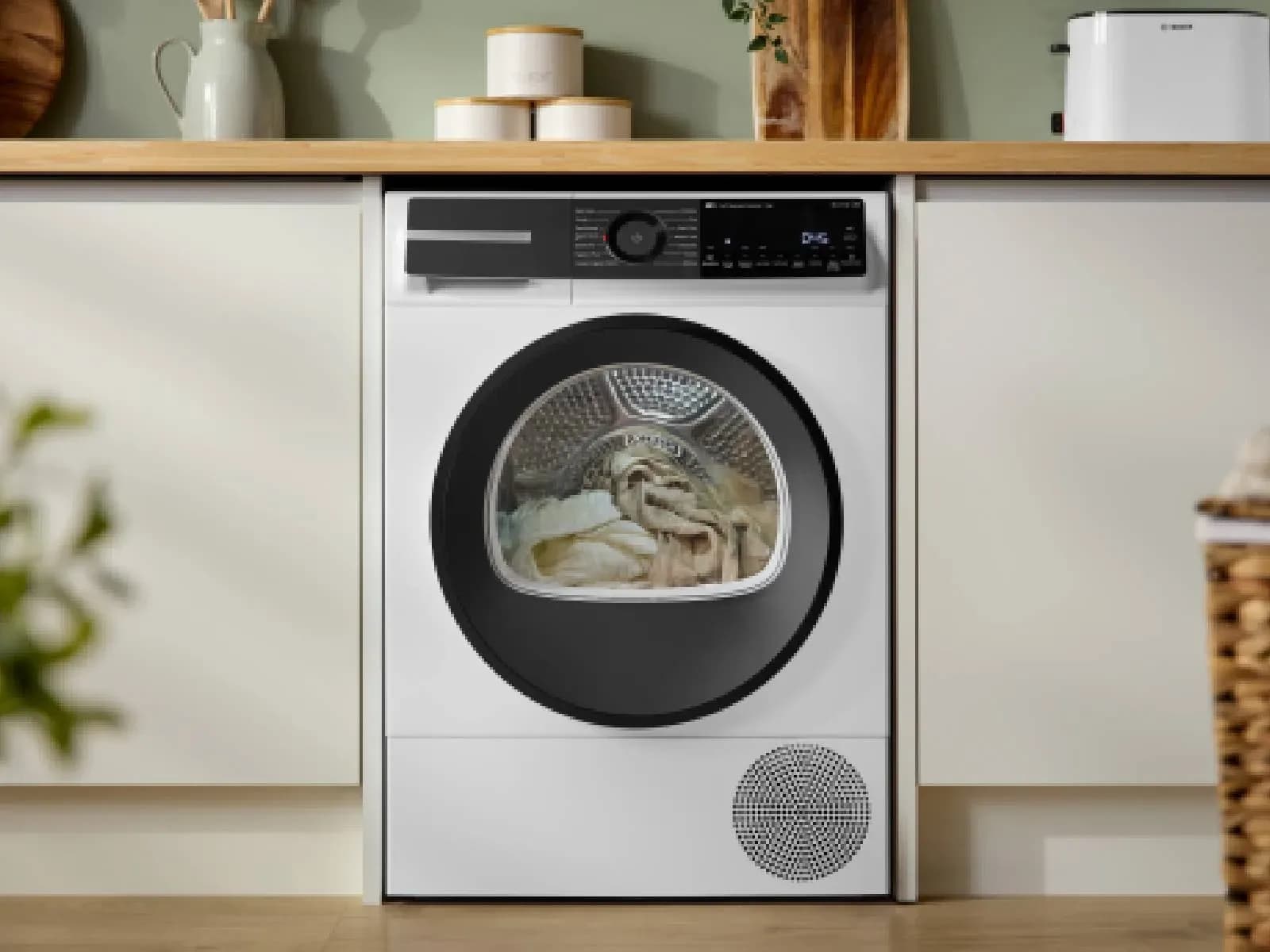
Take the Bosch WTH85225IE, an 8 kg Series 4 heat-pump dryer, as an example of what a mid-range model lists. Its product page gives a rated capacity of 8.0 kg for the eco programme at full load, an airborne noise figure of 63 dB(A) (emission class B), and a condensation efficiency of 83% (class C). The page gives no annual kWh figure. It shows an energy cost per cycle instead, and that estimate assumes a price of €0.25 per kWh with no date, so this article leaves it out. The page's cost per cycle figure is also not a like-for-like annual number, so it cannot be compared with the Which? averages.
One model's figures say little about the whole type. Use the page for what it lists, and the Which? averages for the comparison.
Condenser and vented dryers: cheaper to buy, dearer to run
Which? says vented tumble dryers 'are often the cheapest to buy', and then adds that they are 'the most expensive to run'. The page's average for vented models, £139.74 a year, sits just above its condenser average of £138.91, so the two are close enough that running cost alone will not settle the choice between them.
Condensers are, in the page's words, 'still much pricier to run than a heat pump'. The page does not rank condensers on purchase price, so the firm point is simply that they cost far more to run than a heat-pump model. Whether that gap matters depends on how many loads a week the flat dries.
If you are choosing between a condenser and a vented model, the page's figures suggest the decision is about fit and budget rather than running cost. Vented models are often the cheapest to buy and are the most expensive to run, while condensers sit just below them on running cost. Check the installation requirements on the exact model's page before you buy, because the pages used here do not cover them.
This article has no purchase prices for either type from the pages it used, so the price side of the comparison is incomplete. Get two quotes for the same capacity before you decide.
Drying racks: free to run, slow to finish
Which? calls air drying 'the only truly free way to dry your clothes'. It takes longer and can take up space indoors, and the page is clear about that trade-off. It does offer a few ways to make a rack work better in a small flat.
The Which? page treats the plain rack and the heated airer as two points on one scale. The plain rack costs nothing to run but takes time. The heated airer costs some energy, is usually cheaper to run than a dryer, and may be gentler on delicate fabrics. Choosing between them is a question of how much time the flat has, not a question of money alone.
Put the airer in the warmest room. The page suggests a south-facing upstairs room near a window.
Dry a smaller load. Taking out items you do not need straight away finishes the rest sooner and uses less energy.
A heated airer is an option. The page says its energy cost is usually lower than a dryer's, and it may be gentler on delicate fabrics.
Drying rack spec: what a product page tells you
The Brabantia HangOn 20 m rack shows what a rack's specification looks like. Brabantia's own page lists 20 m of drying line (2 wash loads), a weight of 4.6 kg, and a size of 98 cm high, 5 cm long and 59 cm wide. The page does not say which of those dimensions is open and which is folded, so measure before you buy.
The same page says the rack is for indoor and limited outdoor use. It can handle some sunshine, but it is not suited to rain or corrosive environments. For a flat that dries indoors most of the time, that is no drawback. Is it the whole story? Not quite, because the rack still needs a free stretch of floor or wall to stand in.
Noise and space in a small flat
Noise is the figure that matters most when a dryer sits near a bedroom or a sofa. The Bosch WTH85225IE lists 63 dB(A) on its product page. The sources used here give no noise figure for the condenser or vented types, so the comparison is one-sided on this point. That is a gap in this article, not evidence that the other types are quieter or louder.
Space is the other constraint. The Bosch product page does not list the model's depth or height in the parts that loaded, so this article cannot say whether it fits a given niche. Does it fit? Only a tape measure can answer that. The one size on a product page used here is the Brabantia rack's, and that page does not say which dimension is open or folded.
Measure the niche, the door swing and the route from the wall socket before you choose. Those three numbers will rule out more machines than any chart.
Noise also depends on where the machine stands. A dryer set into a kitchen niche sits close to the cook and the sofa, while one in a hall sits further from both. The room layout matters as much as the published figure, so compare the two together.
Which setup fits which flat
Start with two questions: how many loads a week, and whether the flat has a warm room for drying. If the machine runs most days, the running-cost gap matters more than the purchase price. If you dry only a few loads a week, a rack's zero running cost matters more than either machine's.
A simple test helps. Count the loads a typical week would need, then price a machine against a rack for that number of loads. If the running-cost gap is small over that many loads, the purchase price decides the question. If the gap is large, the running cost carries the case, and the machine earns back its price over time.
1. Count your loads a week. The Which? averages assume three cotton loads.
2. Check the energy label for the exact model, because the Bosch figures above do not agree.
3. Measure the niche, the door swing and the room before buying.
4. Compare the noise figure with the room where the dryer will run, since the figure here covers one model only.
Verdict: a heat-pump dryer for a flat that dries often
For a small flat that runs a dryer most weeks, a heat-pump dryer is the clearest choice on running cost. Which? puts the average at £54.32 a year against about £139 for the other two types, on its own assumptions. For a flat that dries only a few loads, a drying rack is the cheapest way to dry, provided the room is warm enough to dry in.
The one real downside is the purchase price. Which? says heat-pump dryers 'can be expensive to buy', and the pages used for this article give no price to set against the savings. Before you buy, price the machine in your own shop and work out how many years the running-cost gap would take to cover the difference.
For a reader who wants one answer, it is this. Buy the heat-pump dryer if the flat dries most weeks and the purchase price is within reach, and keep a drying rack for the quieter weeks and the sunny days.
Key specs
- Bosch WTH85225IE rated capacity
- 8.0 kg (eco programme, full load)
- Bosch WTH85225IE noise
- 63 dB(A), emission class B
- Bosch WTH85225IE condensation efficiency
- 83%, class C
- Bosch WRB247C9GB footnote energy
- 79 kWh per year
- Bosch FAQ on the same UK page
- 149 kWh per year, for an unnamed Series 8 model
- Which? heat-pump average (Oct 2026)
- £54.32 a year
- Which? condenser average (Oct 2026)
- £138.91 a year
- Which? vented average (Oct 2026)
- £139.74 a year
- Brabantia HangOn 20 m rack
- 20 m of line, 2 wash loads, 4.6 kg
Side by side
| Heat-pump dryer | Condenser dryer | Vented dryer | Drying rack | |
|---|---|---|---|---|
| Average running cost a year (Which?) | £54.32 | £138.91 | £139.74 | No electricity (Which?) |
| Purchase price (Which?) | Can be expensive | Not in sources | Often the cheapest | Not in sources |
| Capacity | 8 kg (Bosch WTH85225IE); 9 kg (WRB247C9GB) | Not in sources | Not in sources | 20 m, 2 wash loads (Brabantia) |
| Noise | 63 dB(A) (WTH85225IE) | Not in sources | Not in sources | Not applicable |
| Best fit | Frequent loads | Middle ground, pricier to run than a heat pump | Lower price, higher running cost | Few loads, warm room |
A heat-pump dryer for frequent use in a small flat, with a drying rack for the rest.
What works
- Lowest average running cost in the Which? figures: £54.32 a year
- Bosch publishes a noise figure of 63 dB(A) for its 8 kg model
- A drying rack adds no running cost of its own
What doesn’t
- Can be expensive to buy, according to Which?
Next door
More notes, a few doors down the street.