A note from next door
TravelRoundup
Three bike storage types for small apartments, and the space each one takes
Bike storage for small apartments: wall brackets, a double-tier stacker and a freestanding rack, with the space figures each maker publishes and what they leave out.
Start with the wall, then the floor
Small flats rarely have spare floor, so the bike question usually turns on one thing: what does the storage give back? A rack on a wall leaves the floor alone. A rack on the floor takes a footprint, and you need to know its size before you buy one. Where will the bike go when the hallway is already full?
This roundup compares three storage types. They differ in what they hang from, how many bikes they hold and what they ask of the room. Every figure below comes from a manufacturer's own product page that was open while this was written. None of it comes from a test or from owner use. Where a page gives no number, this article says so, because a missing figure is more useful to you than a guessed one. Each section below follows the same order: what the maker says, what the page leaves out, and what that means for the room you have.
1. Wall brackets: the floor stays clear
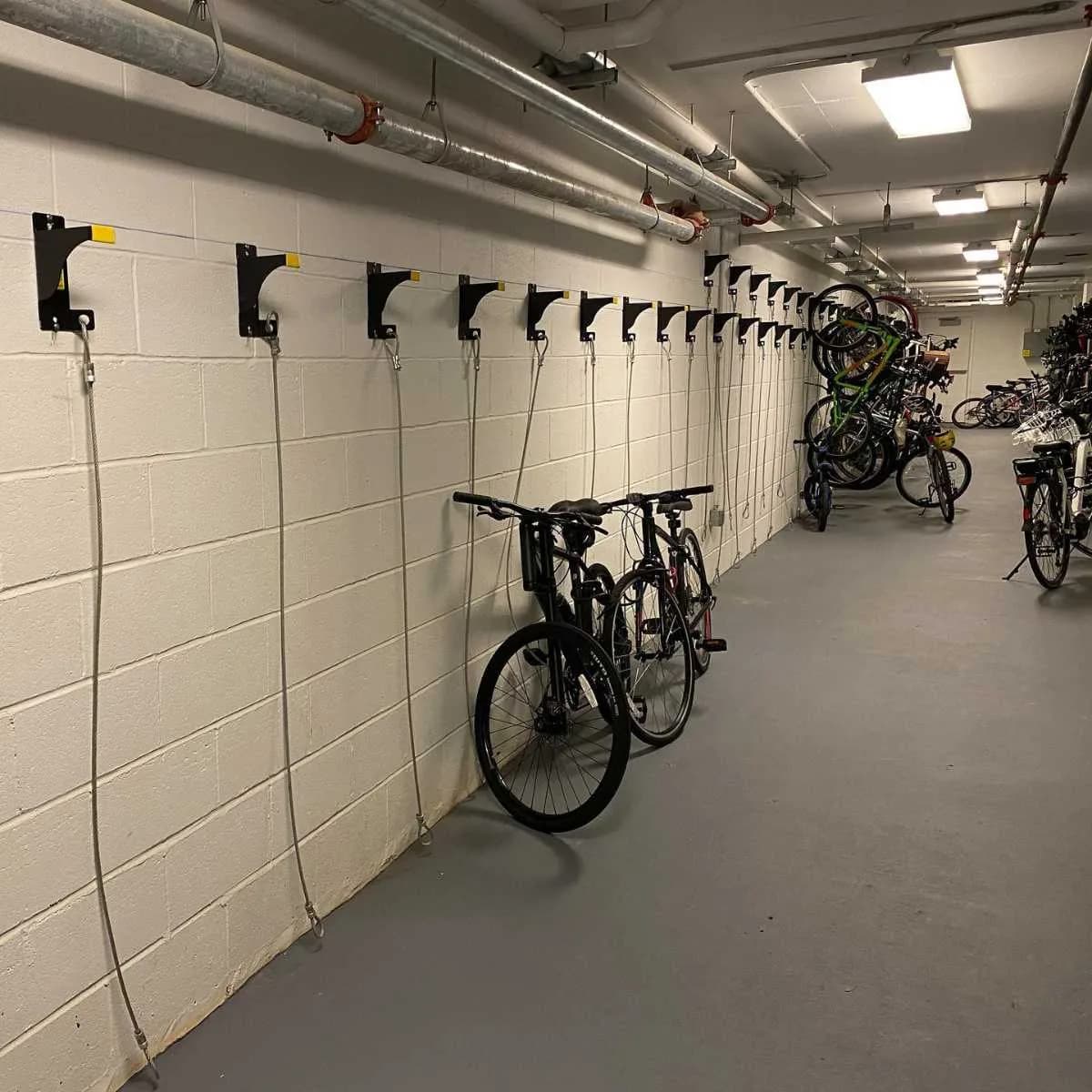
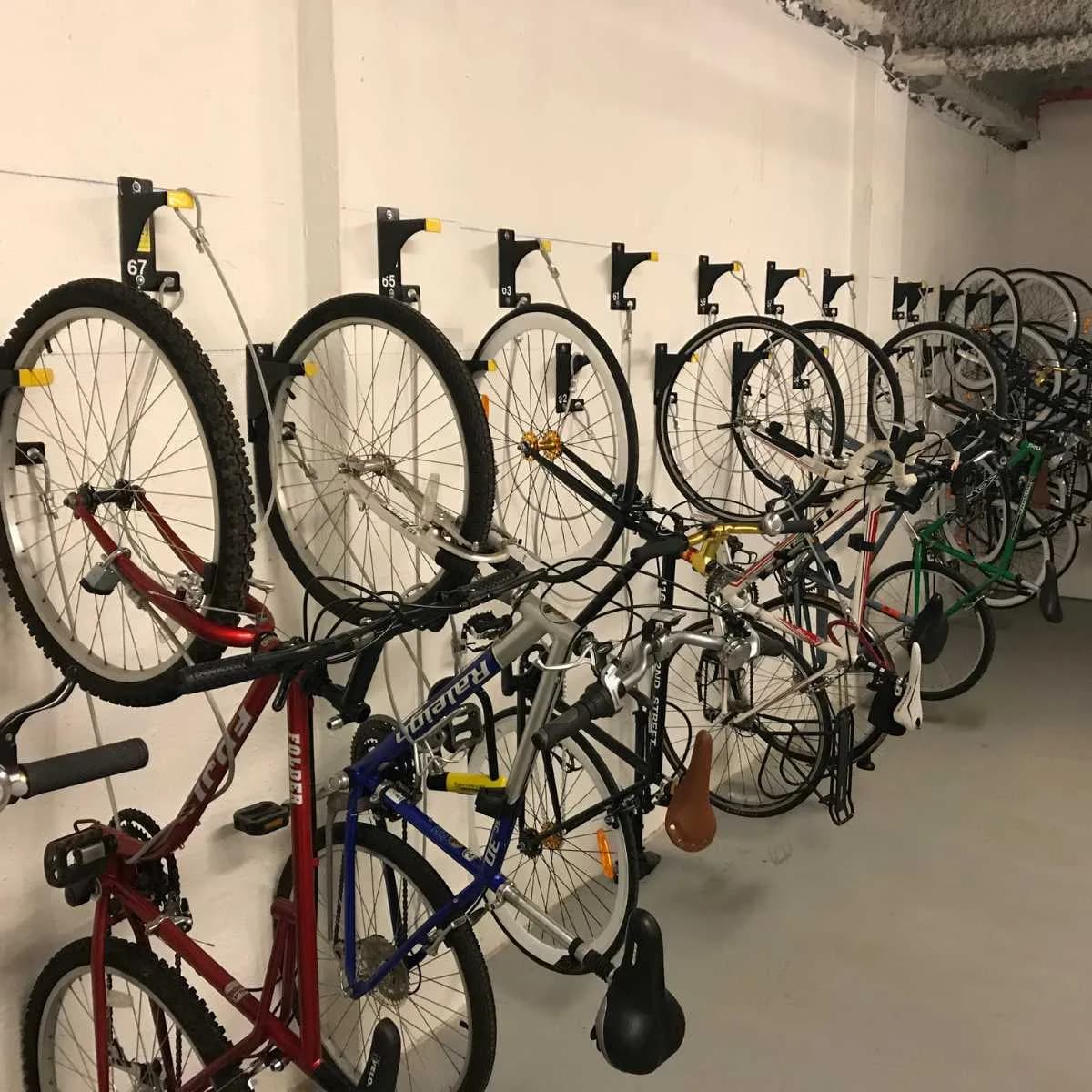
WireCrafters sells the Bicycle Wall Rider, a bracket made from 11 gauge (1/8 inch) steel. The bike hangs by its front wheel from a steel cable, and the cable ends in a loop so the owner can add a padlock. The page says the bracket can hold virtually any bike, comes with two pre-drilled holes and can be installed with standard hand tools. The bracket sits on the wall, so nothing stands on the floor. For a flat where every square foot of floor is already in use, that is the main reason to look at the wall first.
What the page leaves out matters as much. It gives no overall size, no depth from the wall and no weight limit, so you cannot tell how far a hanging bike swings into the room. Can the wall take the fixings? The page does not say. The cable length is stated two ways: six feet in the body text and five feet in the feature list. The spacing guide is a separate PDF, and this article did not open it. Ask the maker for the spacing before you mark the wall. If the wall is the only spare surface, measure the gap between it and the nearest furniture, because a bike hanging from a bracket still has to be walked past.
2. A double-tier stacker: the space figure is the claim to test
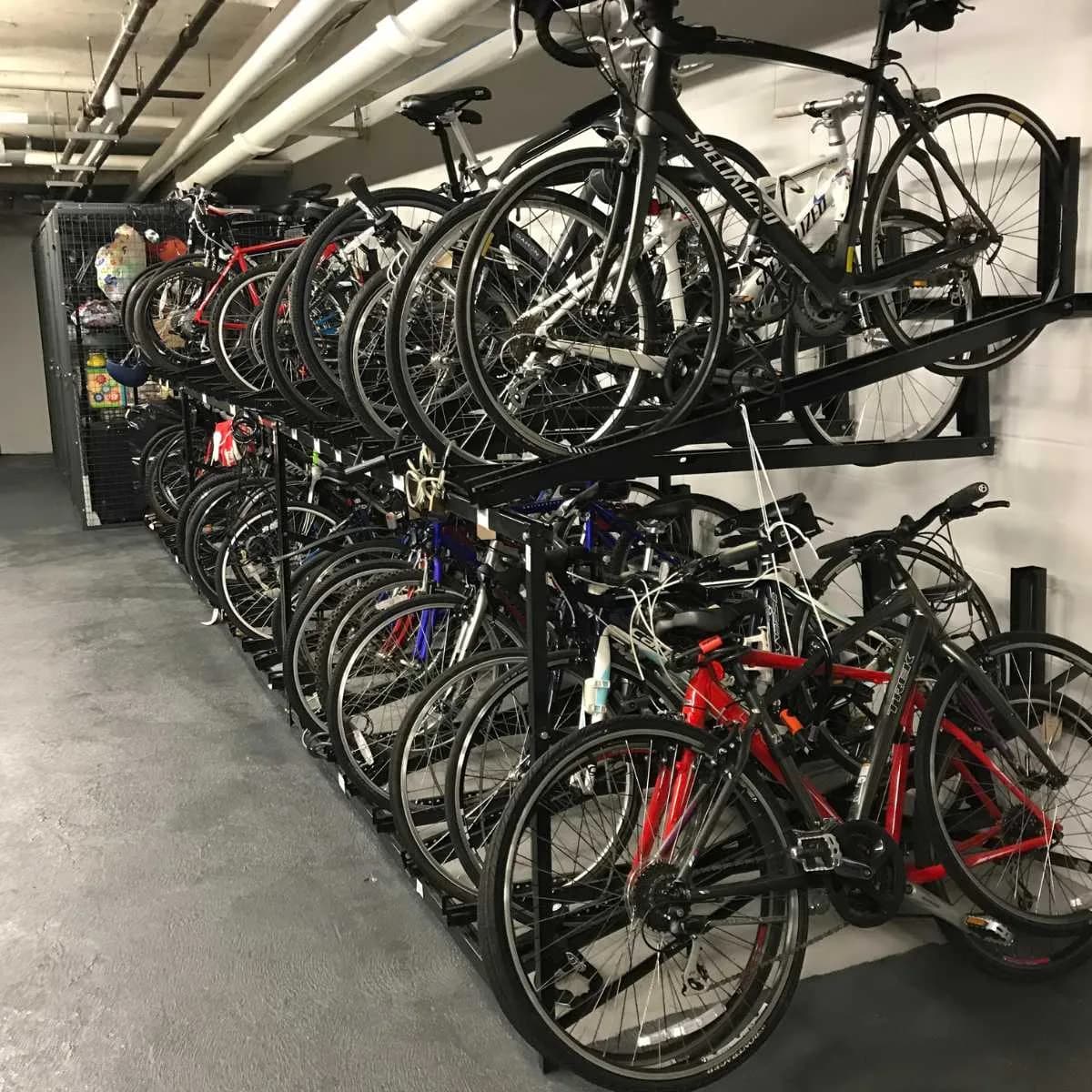
The WireCrafters Bike Stacker is a double-tier rack for condominiums and multi-family buildings. Its main space claim sits in one line on the page: store 8 to 14 bikes in roughly 8 feet of space. The page says the rack comes in different sizes, but it gives no overall width, depth or height. It does not say how much room a rider needs to lift a bike into the upper tray. That is the number to ask about before you rely on the eight feet. The page is written for buildings, not for one flat, so read its numbers with that in mind.
The build is 16 gauge galvanized steel trays on 1/8 inch steel angle uprights, with 14 gauge steel channel rails. The trays are staggered so bikes clear one another, and the page says the rack takes any bike except tandems. Optional stop pins hold a bike forward for unusual sizes or tire widths, and bikes can be locked to the steel tray. Mounting is the gap: the page does not say whether the rack is fixed to a wall or a floor, or stands free. How many bikes will really fit? The 8 to 14 range leaves that open, since the page does not say what spacing it assumes. WireCrafters offers installation and layout help, so ask them before you measure. Measure your widest bike and your heaviest bike, not your average one, because the page's range does not say which bikes it was measured for.
3. A tube-frame rail: several bikes on one steel structure
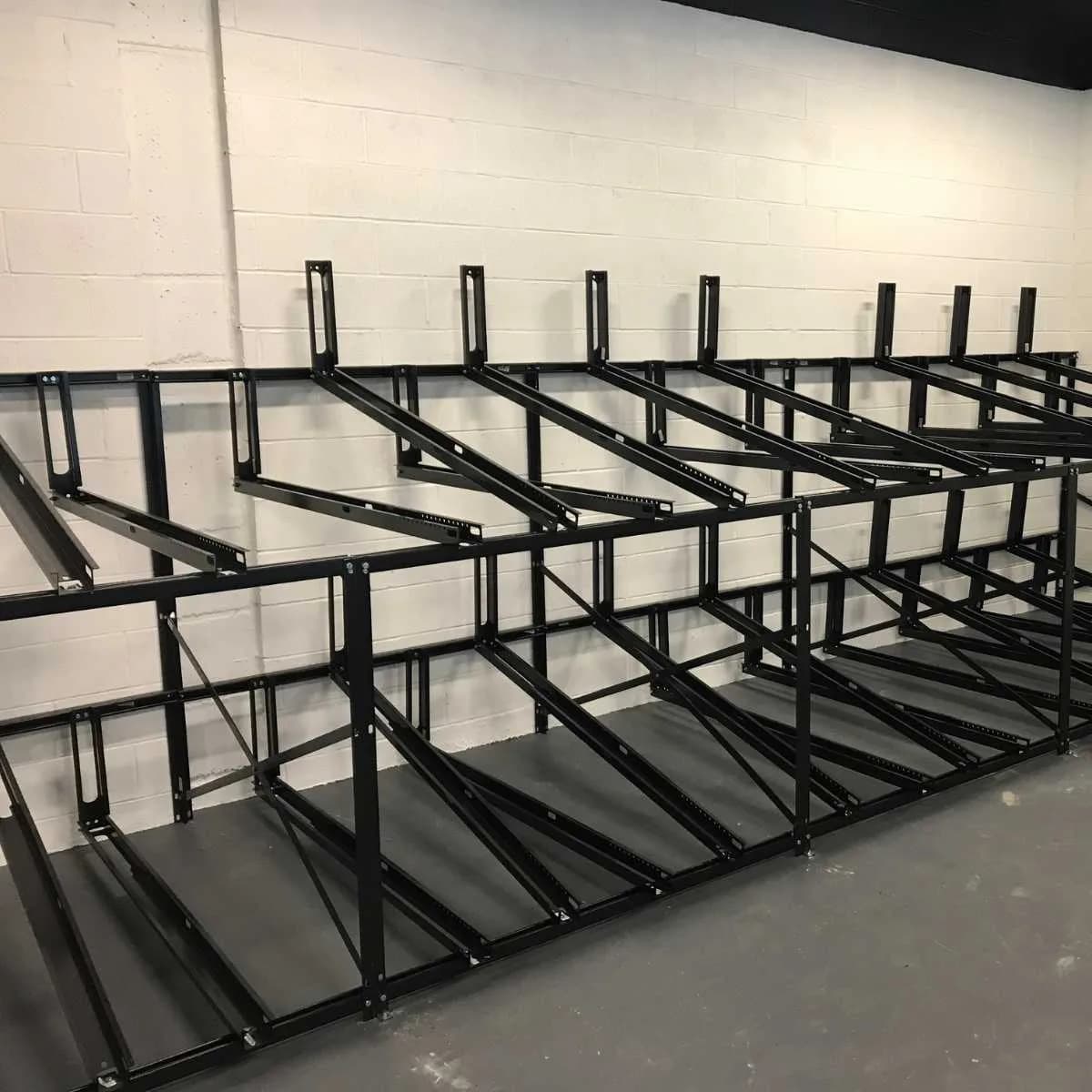
The Bicycle Wall Rider page also describes a larger option. WireCrafters says it can build a tube frame system to hang multiple bikes in the center of a room, using heavy two inch square tubing for both the vertical and horizontal members. The photo on that page of a wall-mounted steel rail, with bikes hung in a row, shows the same kind of structure in a building's storage room. The center-of-room version is described in one sentence and, as far as this article could see, is not shown in any photo.
The page gives no space figure for either version: no length, no depth, no number of bikes per foot of wall and no weight limit. The only size on the page is the tubing. A tube frame is built to order, so the floor or wall it takes is a question for WireCrafters, and you should ask for a drawing before you plan a room around one. Is a custom build worth it for a single flat? The page does not say, and it gives no lead time either.

Which one to choose, and the one real downside
For one spare wall and a bike you ride often, the wall bracket costs the least floor space and publishes the least size. For a shared bike room, the stacker is the one to measure, since its eight-foot claim can be checked against a real room. A tube-frame rail suits a larger shared room where a custom build is an option, provided WireCrafters' drawing fits. Which of those rooms is yours? Start there, not with the product photo.
The downside that applies to all three is the same: none of these pages gives a full, comparable set of dimensions. The space you plan will be your own measurement, taken with the bike and its pedals in mind, not the figure on a product page. Before you buy, take the measurements you can take yourself: the clear floor, the wall length, the door width, and the bike's own length and handlebar width. Then compare them with whichever figures each page does give.